


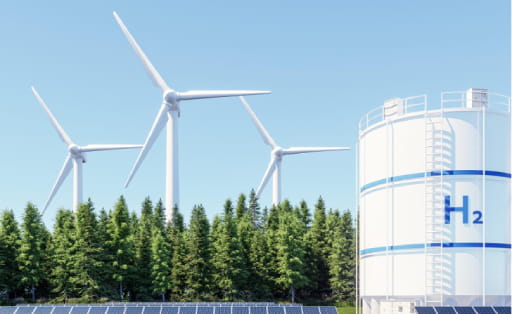

North africa’s readiness to scale renewables
North Africa is transitioning from pilot projec...
Monday, 23 March 2026
SUPPORTED BY
HELD UNDER THE PATRONAGE OF HIS EXCELLENCY ABDEL FATTAH EL SISI, PRESIDENT OF THE ARAB REPUBLIC OF EGYPT
Thursday, 25 June 2026
North Africa is positioning itself as Europe's primary supplier of green hydrogen and ammonia, leveraging world class renewable resources and strategic proximity to major shipping routes. Egypt and Morocco have collectively approved over $40 billion in projects targeting 95% export orientation, with production ramping from pilot scale today toward multi-million-tonne capacity by 2030-2032. The fundamental thesis is clear: as Europe pursues its 10 million tonnes per year hydrogen import target, North African producers with established infrastructure, competitive renewables, and logistics access will capture the lion's share of this emerging market.
However, success hinges less on achieving the lowest levelized cost of hydrogen and more on solving three
interconnected challenges:
Early movers like Scatec-Fertiglobe (H2Global contract) and OCP (fertilizer self-sufficiency) demonstrate viable pathways, but the broader pipeline remains heavily dependent on development finance institutions, political risk mitigation, and coordinated port development.
The strategic insight is that infrastructure creates competitive moats in commodity markets. Egypt's transformation of the Suez Canal into a green bunkering corridor and Morocco's construction of purpose-built
ammonia export terminals represent structural advantages that cannot be easily replicated. The race is not to
produce the cheapest molecule, but to control the logistics corridor connecting renewable energy zones to end
markets.
North africa’s readiness to scale renewables
Throughput growth and margin resilience emerge as key themes for refining sector in 2026
From gas to renewables: Egypt’s move towards clean energy
Will gas continue to rule Egypt’s grid despite the renewables boom?
Egypt Energy Market Overview 2026
Egypt’s upstream revival: Over US$20 billion of investment committed by 2030


dmg events is a global exhibitions and conferences organiser, with a portfolio of over 80 events focusing on diverse industries, from energy, construction and transport to design and hospitality. More than 425,000 visitors attend our events annually, creating opportunities to network, do business, overcome challenges and discover emerging industry opportunities.
Member of


